
Culinary Mushrooms, Functional Mushrooms, Lion's Mane, Medicinal Mushrooms
The Ultimate Guide to Lion’s Mane Coffee: Focus, Neurogenesis, and the Science of the Perfect Brew
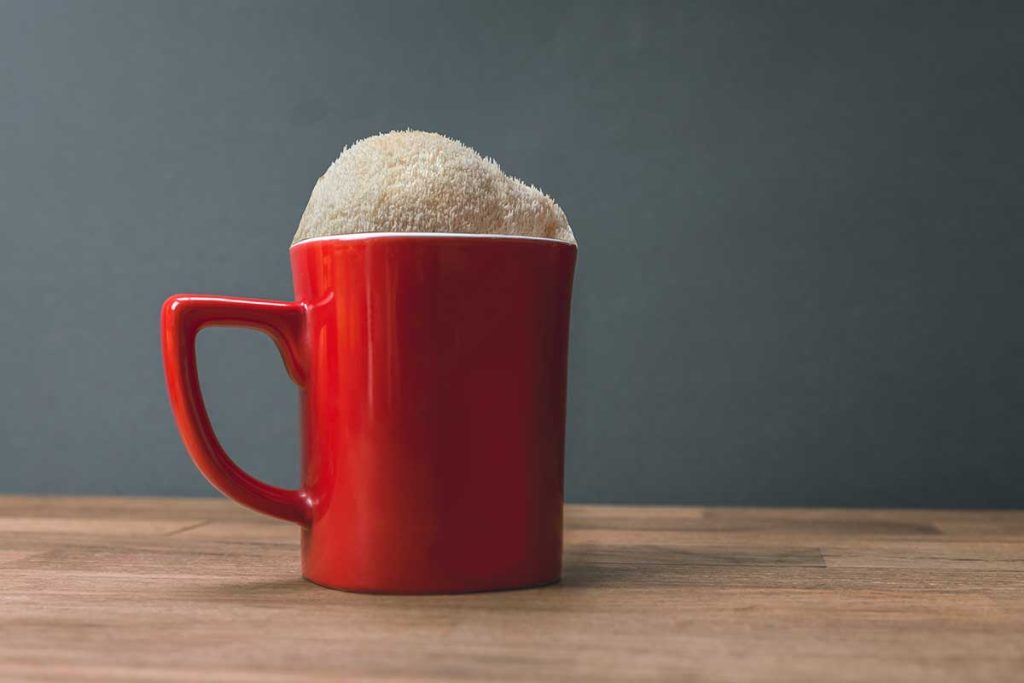
For decades, our relationship with coffee has been a double-edged sword. We rely on it for the morning “spark” to ignite our productivity, yet we begrudgingly accept the jittery hands, the mid- afternoon energy crash, and the creeping sense of caffeine-induced anxiety. But what if your morning ritual could do more than just wake you up? What if it could actually grow your brain?
Enter Lion’s Mane coffee. This isn’t just a wellness trend; it is a fundamental shift in how we approach cognitive performance. By combining the immediate central nervous system stimulation of caffeine with the neuroprotective and neurogenic properties of the Hericium erinaceus mushroom, we are witnessing the birth of a new category of “functional beverages.” In this comprehensive guide, we will dive deep into the science, the industry secrets, and the practical application of the world’s most powerful legal focus stack.
I. What Exactly is Lion’s Mane Coffee?
At its core, Lion’s Mane coffee is a blend of premium coffee beans (ground or instant) infused
with a concentrated extract of the Lion’s Mane mushroom. To the uninitiated, the idea of
“mushroom coffee” conjures images of a murky, savory broth that tastes more like a forest floor
than a morning pick-me-up. However, the reality is far more sophisticated.
Functional mushroom extracts, when processed correctly, possess a mild, earthy, and slightly
cocoa-like profile. When blended with the bold, roasty notes of high-altitude Arabica beans, the
mushroom notes vanish, leaving behind a cup that tastes like a smoother, less acidic version of
your favorite coffee. But while the taste remains familiar, the biological impact is radically
different.
The Anatomy of the Lion’s Mane Mushroom
Lion’s Mane is a unique fungus characterized by its cascading white tendrils, looking more like a
frozen waterfall or a shaggy mane than a traditional cap-and-stem mushroom. Historically used
in Traditional Chinese Medicine (TCM) for digestive health and general vitality, modern clinical
research has shifted the spotlight toward its impact on the brain. Specifically, researchers have
identified two classes of compounds—hericenones and erinacines—that have the rare ability to
cross the blood-brain barrier and stimulate the production of Nerve Growth Factor (NGF).
II. The Science: Why the Caffeine + Lion’s Mane Stack Works
To understand the power of this beverage, we must look at the synergy between its two primary
components. Caffeine is an adenosine receptor antagonist; it works by blocking the
neurotransmitter responsible for telling your brain it’s tired. While effective, this is a “borrowed
energy” system. When the caffeine wears off, adenosine floods the receptors, leading to the
dreaded crash.
“Lion’s Mane does not provide a stimulant effect in the traditional sense. Instead, it provides structural support for the neurons themselves, creating a ‘smooth landing’ for the caffeine
curve.”
1. Neurogenesis and Nerve Growth Factor (NGF)
The standout feature of Lion’s Mane is its role in neurogenesis—the process of growing new
neurons. In a healthy brain, NGF acts as a fertilizer, maintaining and repairing the neural
pathways that allow for rapid electrical signaling. As we age, or as we succumb to chronic stress
and inflammation, our natural production of NGF can decline. By introducing hericenones (from
the mushroom’s fruiting body) and erinacines (from the mycelium), we provide the brain with
the raw materials needed to stimulate neurite outgrowth.
2. Modulating the Caffeine Response
Why do some people get “the jitters”? Caffeine triggers the release of adrenaline and cortisol. For
many, this translates to physical anxiety. The beta-glucans and polysaccharides found in Lion’s
Mane act as adaptogens. They help modulate the body’s stress response, blunting the sharp spike
in cortisol. The result is a state of “calm focus” rather than “wired energy.”
Feature Standard Coffee Lion’s Mane Coffee Focus Duration 1.5 – 3 Hours 4 – 6 Hours Energy Profile Jagged / Spiky Smooth / Sustained Long-Term Benefit None (Tolerance buildup) Neuroprotection & Neurogenesis Adverse Effects Jitters, Crash, Anxiety Minimal to none
III. Industry Secrets: How to Spot a “Fake” Mushroom Coffee
As the market grows, so does the prevalence of low-quality products. For the consumer, the most
important thing to learn is how to read a Supplement Facts panel. Most people are being sold
“mushroom coffee” that contains very little actual mushroom.
The “Mycelium on Grain” Trap
Growing a full Lion’s Mane mushroom (the fruiting body) takes time, specialized equipment, and
a specific climate. To save money, many large-scale producers grow the mushroom’s “roots”
(mycelium) on a bed of sterilized rice, oats, or sorghum. Because the mycelium cannot be
separated from the grain, the entire block is ground up together.
The result? A product that is 60-90% starch. If your label says “Mycelial Biomass” or lists “Organic
Brown Rice” in the ingredients, you are paying for expensive rice powder, not the neurogenic
compounds found in the mushroom itself. Always look for “100% Fruiting Body” on the label.
Extraction Ratios vs. Standardized Percentages
A “10:1” ratio sounds impressive, but it’s often a marketing gimmick. It simply means 10kg of
mushrooms were dried into 1kg of powder. It doesn’t guarantee that the active compounds were
actually made bioavailable. Mushrooms are made of chitin—the same hard substance found in lobster shells. Our stomachs cannot digest chitin. Therefore, the mushroom must undergo a dual-
extraction process (hot water and alcohol) to break down the cell walls and release the beta-
glucans and terpenes.
IV. How to Incorporate Lion’s Mane Coffee into Your Life
Maximizing the benefits of this nootropic beverage requires more than just drinking a cup
whenever you feel tired. It is about strategic timing and preparation.
1. The Consistency Rule
Unlike caffeine, which works instantly, the neurogenic benefits of Lion’s Mane are cumulative.
Clinical studies showing improvements in memory and cognition usually measure results after 2
to 4 weeks of consistent daily use. To see real change in your “brain fog” or verbal recall, you
must make it a daily habit.
2. The “Brain-Optimizer” Recipe (Keto/Bulletproof Style)
For those performing high-level cognitive work, try this “Power Brew”:
- 8oz Brewed Lion’s Mane Coffee
- 1 tbsp C8 MCT Oil (for immediate ketone energy for the brain)
- 1 tsp Grass-fed Ghee or Butter (to slow caffeine absorption)
- A pinch of Ceylon Cinnamon
Blend on high for 10 seconds. The fats work in tandem with the mushroom’s polysaccharides to
provide a rock-solid energy foundation that lasts for hours.
V. Frequently Asked Questions (FAQ)
Does it taste like mushrooms?
No. When using a high-quality dual-extract, the flavor is earthy and subtle. It generally
makes the coffee taste smoother and less bitter.
Can I drink it if I have a mushroom allergy?
If you have a known allergy to fungi or molds, you should exercise extreme caution or
avoid mushroom coffee entirely. Consult your doctor first.
Is it safe to drink every day?
Yes. Lion’s Mane is considered an “edible” mushroom and has been consumed for centuries.
It is non-toxic and non-habit forming.
Will it break my fast?
Pure Lion’s Mane extract and black coffee contain negligible calories and will not break a
fast. It is an excellent tool for extended fasting to keep cognitive energy high.
VI. Conclusion: The Future of Your Morning Ritual
The shift toward Lion’s Mane coffee represents a broader move toward “intentional
consumption.” We are no longer content to simply survive our workdays with a caffeine-induced
buzz; we want to thrive. We want to protect our gray matter, enhance our ability to learn, and
stay focused on what truly matters.
By choosing a product backed by science—one that uses 100% fruiting bodies and transparent
extraction methods—you aren’t just buying coffee. You are investing in your brain’s long-term
health. Tomorrow morning, when you reach for your mug, ask yourself: is this just waking me
up, or is it making me better?
